
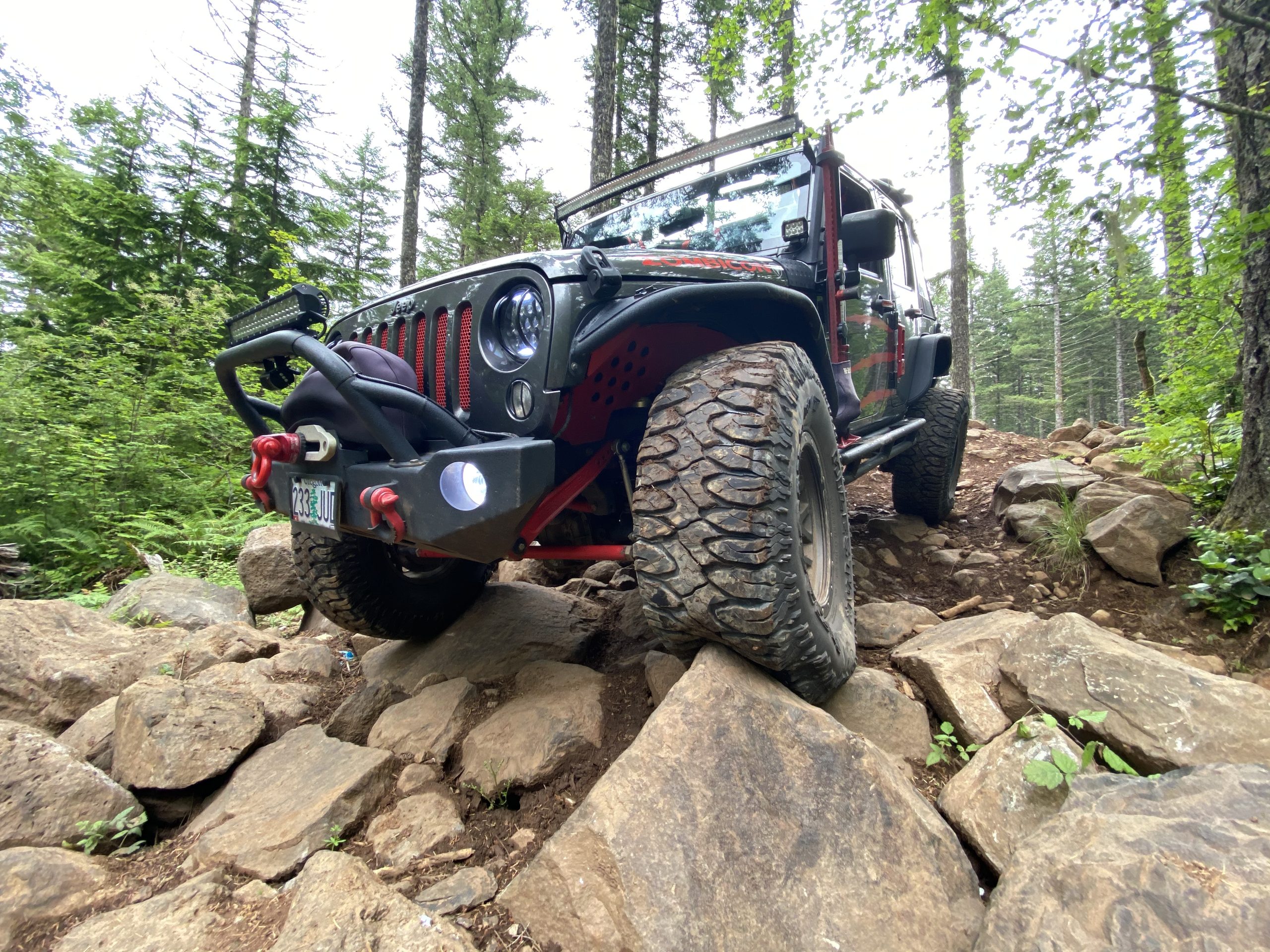
Why Airing Down Saves the Day
Whether you are wheeling a heavily modified off-roading vehicle, maneuvering a full-size pickup truck, or just exploring new trails, tire pressure is the single most critical factor in off-road traction. Upgrading suspension and locking differentials are valuable, but the physical connection between the vehicle and the ground ultimately dictates momentum.
We can’t count the instances where individuals find themselves in rather simple predicaments, where simply deflating their situation could lead to their self recovery, yet due to the absence of any means to re-inflate, they essentially refuse to deflate their tires.
The Mechanics of Deflation
- The Elongated Footprint: Deflating a tire doesn’t just make it wider; it significantly elongates the contact patch front-to-back. Dropping from street pressure to 15 PSI can nearly double the amount of rubber touching the ground.
- Terrain Conformity: A fully inflated tire bounces off rocks and roots, breaking traction. A deflated tire acts as a micro-suspension system, wrapping around obstacles and gripping irregular edges.
- The First Line of Recovery: When a vehicle loses forward momentum in sand, mud, or snow, the instinct is often to reach for the winch or a kinetic rope. In many cases, simply dropping the tire pressure by another 5 to 10 PSI instantly restores enough flotation and bite to drive right out of the predicament.
The Necessity of an Inflation System
Airing down is only viable if you have a reliable way to air back up before hitting the pavement. Driving at highway speeds on deflated tires generates immense heat, risking catastrophic blowout and permanent sidewall damage. A dedicated portable inflation system is a mandatory piece of safety equipment.
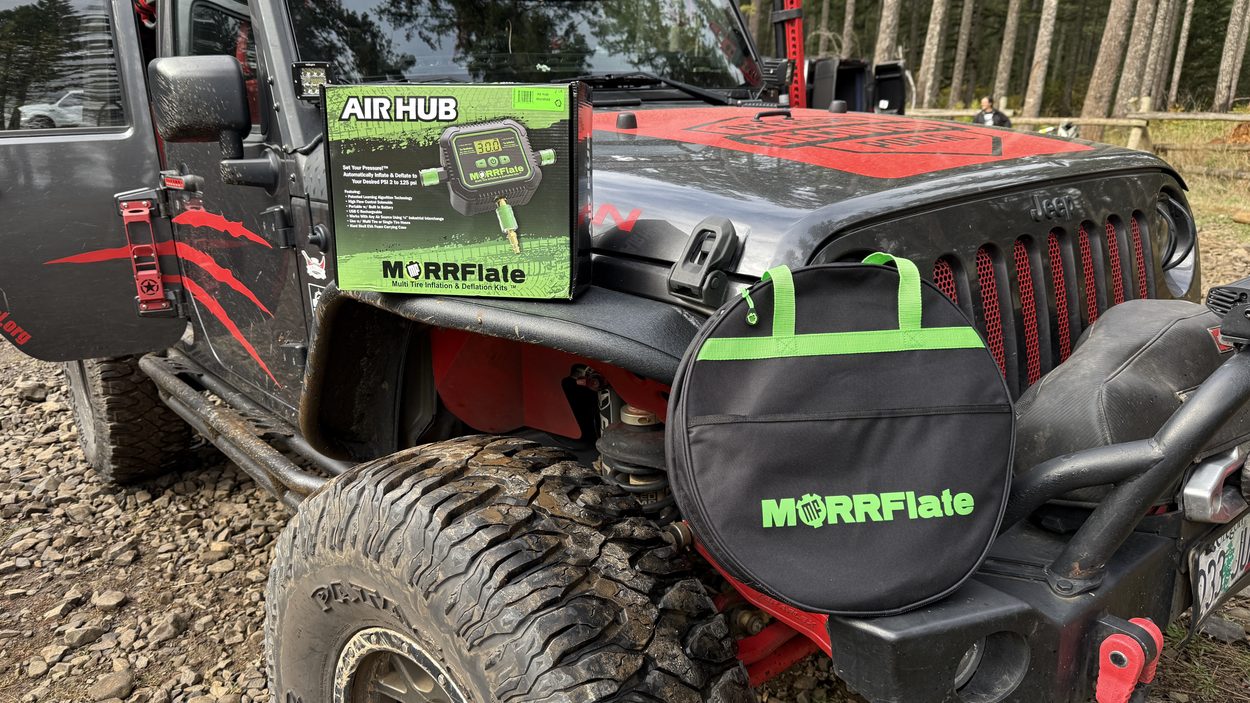
Morrflate: Streamlining the Process
Managing four tires individually with a traditional single air chuck is tedious and time-consuming, especially at the end of a long day on the trail. Morrflate produces highly regarded multi-tire inflation and deflation systems that solve this bottleneck entirely.
- Equalization: By connecting all four valve stems simultaneously, the Morrflate manifold equalizes the pressure across all tires. You never have to manually balance the left and right sides.
- Speed: Running a 4-way hose kit attached to a high-output dual-cylinder compressor allows a rig to go from trail pressure to street pressure in a fraction of the time.
- Community Trust: Because of their durable hoses, heavy-duty brass fittings, and straightforward operation, Morrflate has become one of the most trusted and frequently recommended air systems in the off-road community.
Optimal tire pressure depends heavily on your vehicle’s weight and wheel type. A heavier, full-size rig like a K1500 requires slightly more pressure to keep the tire seated against the rim than a mid-size JKU.
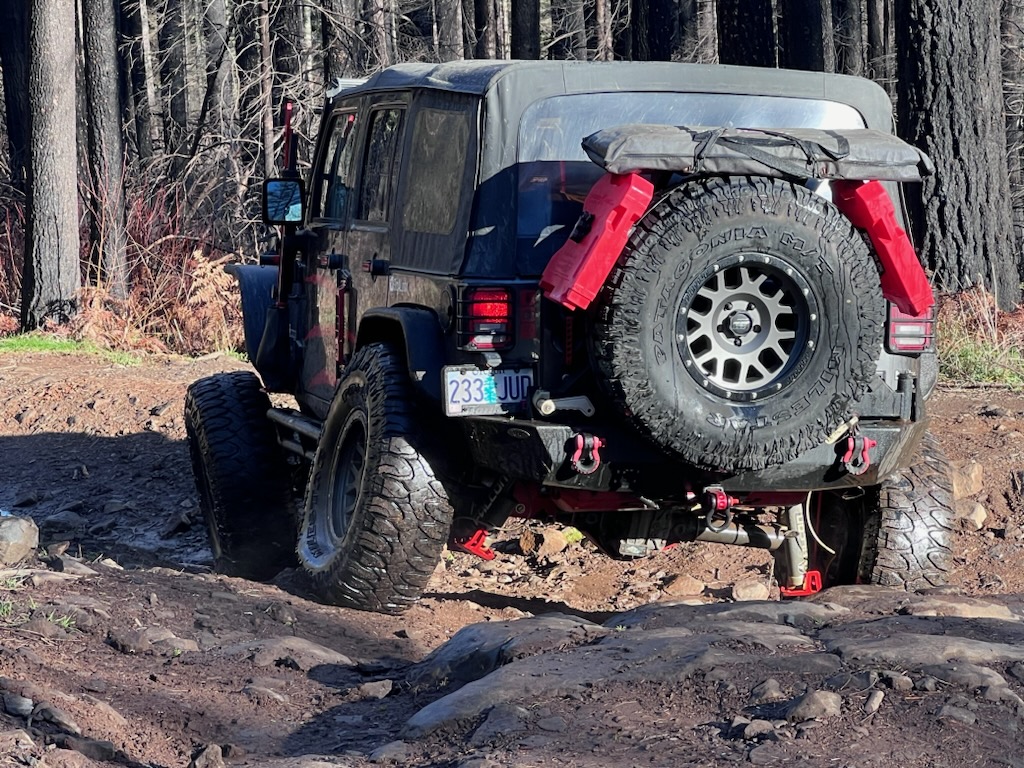
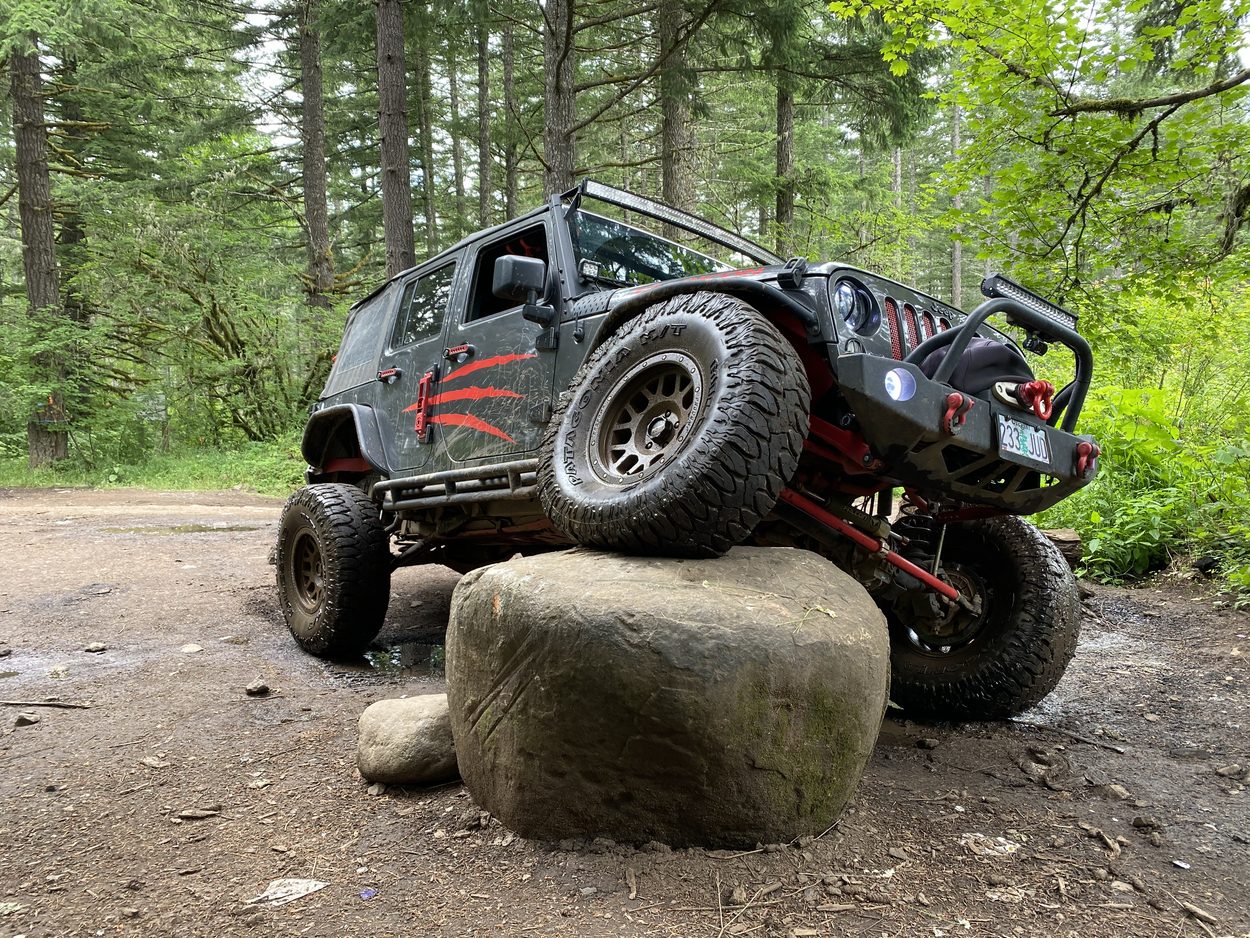
Assuming you are running standard (non-beadlock) wheels, here are the baseline targets:
- Deep Sand (10–15 PSI): The goal here is maximum flotation. Dropping the pressure elongates the tire footprint front-to-back, allowing the vehicle to ride on top of the soft sand rather than digging in and high-centering.
- Slick Mud (14–18 PSI): Often found on deep, wet Pacific Northwest trails, slick clay and mud require a balance. You want enough deformation for the tread blocks to spread and grab irregular surfaces. However, if you go too low, the tire can hydroplane over the slick surface instead of biting through to the hardpan beneath.
- Rock Crawling (10–12 PSI): The focus is on wrapping the rubber around the terrain. Low pressure allows the tire to conform to jagged rocks and ledges, maximizing the physical contact patch for grip.
To find the exact sweet spot for your specific setup, you can adjust the variables below based on the rig you are taking out: